
The short answer: practice day trading for free in a paper trading account: virtual money, real-time prices and the same market, limit and stop orders a broker uses, with nothing at risk. Treat it like real money: a written plan, a fixed position size, a stop on every trade, and a review of every day's trades.
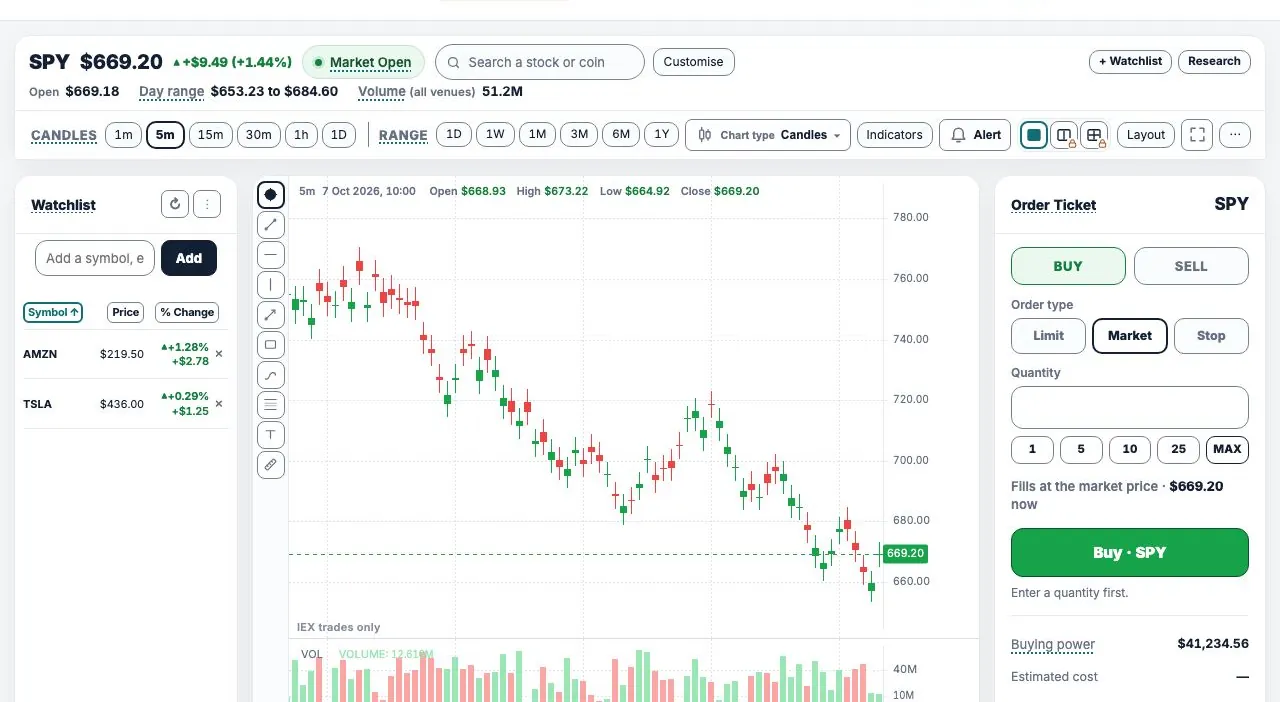
| What you get | On a free JagSim account |
|---|---|
| Virtual money | $100,000 |
| Prices | Real-time from Tiingo, every US exchange, in market hours |
| Orders | Market, limit and stop, for the day or until you cancel |
| Charts | 1-minute to 1-day candles, 14 indicators (2 at a time on Free), a VWAP that restarts at the 9:30 AM open, drawing tools |
| Order entry | Optional order keys and one-click Buy and Sell on the chart, both off until you turn them on |
| Account rules | A cash account: sales settle at once, no day-trade limit, no margin and no short selling |
| Cost | Free, no card, no end date |
Two things stay out of reach in any simulator. The first is the fill: JagSim fills at the last traded price with no bid, ask or spread, so a real account would usually fill slightly worse, most of all in a fast or thin stock. The second is the feeling of real money on the line, which changes how people hold losers and take winners.
Day trading with real money is hard, and many people who try it lose money. Practice builds the mechanics and shows you your own habits; it does not promise results, and nothing here is investment advice. Before trading a real account, read your broker's own rules for day trading, which can differ from a practice account.
Yes. A free paper trading account gives you virtual money, real-time prices and real order types, so you can practice intraday entries and exits with nothing at risk. On JagSim it is $100,000 with no card and no end date.
Practice with the amount you would really trade. The account holds $100,000, but sizing trades as if it held what you would actually put in keeps the practice honest.
Yes, in two ways: crypto trades 24/7, and market replay (JagSim Pro) plays a past trading day minute by minute so you can trade it again.
No. The prices are real but the money is not, and fills are at the last traded price with no spread. Practice builds the mechanics and the habits; real fills and real money add pressure a simulator cannot.
No tool can promise that. Day trading is hard and many people lose money at it. Practice is for learning the mechanics and your own habits before any real money is involved.